


Belly button hoop: your honest buying guide
Summer hit and suddenly everyone's belly button hoops are everywhere again. Crop tops, bikinis, low-rise jeans, it's a whole moment, and honestly, I'm here for it. But if you've ever bought a cheap belly ring only to end up with an irritated, green-tinted piercing a week later, you know the material question matters a lot more than the style question.
This guide covers everything you need to know before you buy a belly button hoop: what gauge to look for, which materials are actually safe, how to tell if your piercing is ready for a hoop style, and why the $15 option from a fast-fashion accessories stand is never, ever worth it (trust me on this one).
What makes a good belly button hoop
Most people shopping for a belly button hoop are focused on the look. That's fair. But the three things that actually determine whether you'll still be wearing it six months from now are material, gauge, and closure style. Get those right and the aesthetic stuff almost takes care of itself.
Material, this is the big one
Belly piercings sit against your skin constantly, which means whatever your ring is made of, your body is reacting to it constantly. Cheap metals, brass, mystery alloys, anything plated over nickel, are a recipe for irritation, rejection, and that gross greenish tint you definitely don't want near a fresh or healed piercing.
The materials worth considering are:
- 14k gold-filled, A thick solid layer of 14k gold (58.3% pure gold) bonded to a brass core. It's 100x thicker than gold plating, hypoallergenic, and designed to last years. This is the sweet spot if you want real gold quality without fine jewellery prices.
- Implant-grade titanium, The go-to for fresh piercings. Completely non-reactive, lightweight, comes in anodised colours. Often recommended by piercers for healing piercings.
- Solid gold (14k or 18k), Beautiful and the most inert option, but the price reflects that. If you're after solid gold, a professional piercer or fine jeweller is the right place to go.
- Sterling silver, Generally fine for healed piercings, but not ideal for belly piercings specifically because it oxidises with sweat and movement. Worth avoiding near piercings that rub against clothing all day.
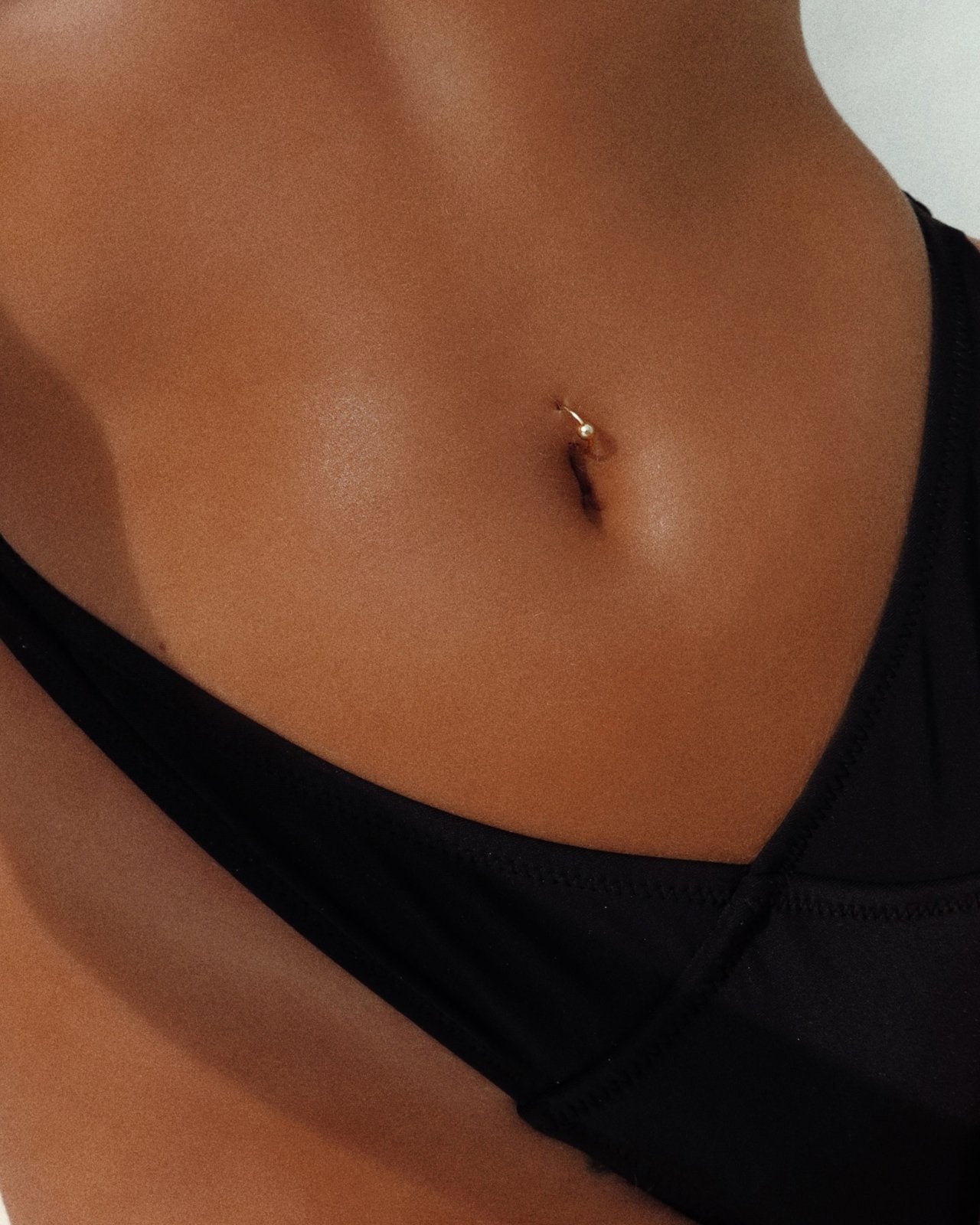
For a healed belly piercing that you want to wear every day, swim in, and not think about, 14k gold-filled is genuinely the best value option. Our Hoop Belly Ring in 14k Yellow Gold Fill is made exactly for this. Hypoallergenic, tarnish-resistant, waterproof, and won't turn your skin green.
Gauge, what size do you actually need
Standard belly piercings are done at 14 gauge (1.6mm). This is important because if you buy a ring that's too thin, it can migrate or cause irritation. Most belly rings sold in Australia are 14g, but always double-check, especially if you're shopping online.
If you got pierced somewhere other than a reputable studio, it's worth confirming your gauge with your piercer before buying. Some studios pierce at 16g, and wearing a 14g ring in a 16g piercing is not a fun experience.
Diameter, the hoop size question
Not gonna lie, this is the part most people skip over and then wonder why their ring feels weird. Standard belly hoop diameter is typically 10mm or 11mm, which sits snugly in a standard navel piercing without too much hang or drag. If you've had your piercing for years and it's fully settled, you might be able to go slightly larger. But for everyday wear, stick close to that 10-11mm range.
Banana bell barbells (the curved bars with balls) are actually more forgiving on fit than hoops, but the hoop style has a cleaner, more jewellery-forward look. Worth the extra attention to sizing.
Closure style
Belly button hoops typically come in a few closure types: seamless rings (no visible closure, just a clean circle), segment rings (a small section pops out to open), and hinged rings (the easiest to get in and out by yourself). If you're putting this in without help, a hinged style is genuinely so much easier. Seamless rings look amazing but require a bit of practice to open and close without distorting the ring.
Is your piercing ready for a hoop?
Belly piercings are surface piercings, which means they take longer to heal than ear lobes, usually 6 to 12 months, sometimes longer. During healing, your piercer almost certainly put you in a straight or curved barbell, not a hoop. That's intentional. Hoops move more, and movement during healing is not your friend.
Signs your piercing is ready for a hoop:
- No redness, swelling, or discharge
- The piercing channel feels smooth and consistent (not tender when you touch around it)
- You've had it for at least 6 months, ideally closer to a year
- Your piercer has given you the all-clear
If you're not sure, genuinely, just ask your piercer. A five-minute check-in can save you weeks of irritation.
Our pick: the hoop belly ring in 14k gold-filled
We've been making jewellery for 10 years and body jewellery is one of those categories where the material question matters more than almost anywhere else. Belly piercings are active piercings, they move, they're close to waistbands, they get sweaty, they go in the ocean. Cheap plating doesn't stand a chance.
Our Hoop Belly Ring in 14k Yellow Gold Fill ($99) is designed for exactly this kind of wear. The 14k gold-filled construction means you're getting a genuinely thick layer of gold, not a flash coating that disappears in a few weeks. It won't tarnish, turn green, or irritate your skin, and you can wear it in the shower, to the beach, and to the gym without thinking about it (obsessed with a piece of jewellery that requires zero maintenance).
Care and maintenance for your belly button hoop
Good news: 14k gold-filled belly rings are genuinely low maintenance. But there are a few things worth knowing.
- Swimming, Fine in the ocean and pools. Chlorine won't damage gold-filled the way it damages plated pieces, but rinsing with fresh water after a pool session is always a good habit.
- Perfume and sunscreen, Try not to spray directly onto the ring. Chemicals in perfume can dull the surface over time. Spray first, let it dry, then get dressed.
- Cleaning, A soft cloth and warm water is all you need. No harsh chemicals, no ultrasonic cleaners.
- Storage, If you ever take it out, store it flat rather than coiled. Small habit that keeps the shape perfect.
If you want more detail on caring for gold-filled pieces generally, this post on how to clean gold-filled jewellery covers it well.
Frequently asked questions
Can I sleep in a belly button hoop?
Once your piercing is fully healed, yes. The bigger concern is snagging, if you're a stomach sleeper, a hoop can catch on your sheets or waistband more than a barbell would. Some people swap to a flat barbell for sleeping and wear the hoop during the day. Either way works.
Will a gold-filled belly ring turn my skin green?
No. The green-skin reaction comes from copper oxidising against your skin, which happens with low-quality plated pieces and solid brass. A genuine 14k gold-filled ring has a thick, bonded gold layer that acts as a complete barrier. You won't see any discolouration.
Is 14k gold-filled safe for a healing piercing?
It's better than most options, but for a fresh or still-healing piercing, implant-grade titanium is what most professional piercers recommend. Once you're fully healed, 14k gold-filled is an excellent long-term choice. When in doubt, check with your piercer, they know your specific piercing and healing history.
How do I know if my belly button hoop is the right size?
If it sits flat against your navel without excess ring showing above or below the piercing, you're in the right ballpark. If there's a lot of ring hanging loose, it's slightly too large and will move around more than ideal. Too tight and it'll put pressure on the piercing channel. A 10-11mm inner diameter is the standard starting point for most people.
Can I wear a belly hoop to the beach?
Yes, absolutely. That's actually one of the best things about 14k gold-filled body jewellery. It's waterproof and designed for daily, active wear. Salt water won't damage it. Rinse after if you want to be thorough, but it's not essential. We wrote more about waterproof jewellery generally in our guide to the best waterproof jewellery in Australia if you're building out a set of pieces that can keep up with you.
And if you're curious about why gold-filled is worth choosing over gold-plated more broadly, this comparison of gold-filled vs gold-plated explains it really clearly.
Are you shopping for a belly button hoop for the first time, or finally upgrading from a piece that let you down? Either way, I'd love to know what drew you back to this style.
P.S. If your piercing has been feeling a bit irritated lately, check whether your current ring is the right gauge before assuming it's a skin issue. A gauge mismatch is one of the most common and easily fixed causes of ongoing belly piercing irritation.
